
How port‑edge transloading turns warehouses from storage sinks into flow engines
March 4, 2026
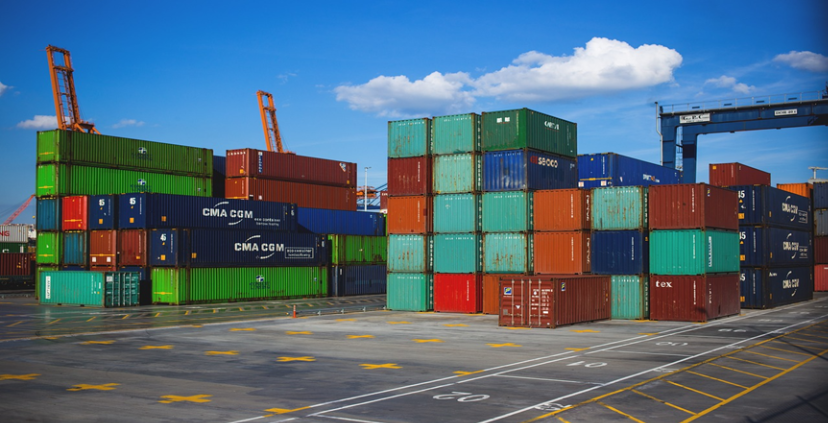
With U.S warehouse utilization above 85%, long-term storage is becoming a luxury- and a capital drag.
In 2026, the industry is shifting from storage to flow. Port‑adjacent transload hubs let companies move goods directly from ocean containers into domestic trailers or railcars, reducing inland transport costs, cutting inventory days, and enabling last‑minute routing based on real‑time demand signals.
Problem:
In high demand hubs such as Port Houston or the Inland Empire, vacancy for manufacturing and specialized space remains as low as 2.2%. Even where utilization has dipped, warehouse prices remain elevated due to aspects such as labor and facility costs. In the long run, this makes traditional storage a luxury but more importantly, a “capital killer”. Consequently, the industry has been wondering what to do with the abundance of inventory already stored in warehouses and how to effectively change the use of ports.
How transloading solves it:
One of the key trends for 2026 is to treat ports as flow points, not as storage points. In practice, boxes aren’t just being moved anymore – they are being labeled or even assembled at the transload hub to skip the need for another warehouse.
Transloading allows for 3-to-2 consolidation (three ocean containers can usually fit into two domestic trailers), which allows for heavier loads and therefore reduces the total number of trips. By moving goods directly from ocean containers to domestic trailers or railcars at the port’s edge, leaders use transloading to postpone destination decisions. In a world of volatile consumer demand, this “intentional delay” at the transload hub allows logistics managers to wait until the last possible second to decide where goods should go based on real-time sales data rather than six-month-old forecasts.
As a result, the act immediately maximizes every mile and reduces inland transport costs; Leading industry leaders to emphasize the use of transloading as a strategy. Instead of letting goods sit in warehouses for months, they can be sorted and distributed mid-stream to meet demand.
Operational Benefits:
- Lower drayage costs: Fewer inland moves and optimized container consolidation reduce driver hours and fees.
- Improved modal efficiency: 3→2 consolidation increases trailer and railcar density, lowering per‑unit transport cost.
- Faster response to demand: Postponement at the port lets planners route shipments to the highest‑demand markets using current sales data.
“In today’s disruption-prone environment, transloading facilities act as strategic buffer zones. They allow freight to be stored, rerouted, consolidated, or redirected as conditions change” (STG Logistics, 2026). With sudden demand, freight, and tariff changes, the railroad industry will have to re-design their processes in order to perform under multiple scenarios. With transloading, congestion in ports lessens as more inventory is transferred from one place to another in various ways.
Precision Scheduled Railroading (PSR) has attempted to transition the industry toward a lean, schedule-driven model, but the “last mile” at the port has often remained a source of friction. By treating the transload hub as a synchronized extension of the rail terminal, leaders can potentially eliminate the “dwell time” that erodes margins.
In this model, the transload facility functions as a high-speed valve: it receives the heavy volume of ocean arrivals and “metabolizes” them into optimized, domestic-ready loads that fit into pre-scheduled rail windows. This synchronization ensures that assets—locomotives, railcars, and chassis—never sit idle.
When the heartbeat of the rail schedule is matched by the fluid throughput of a transload hub, the result is a massive increase in inventory velocity and a significant reduction in the total cost of ownership. In 2026, the competitive advantage belongs to the operators who can turn a rigid schedule into a flexible, real-time advantage.
If this all sounds too good to be true, keep in mind that key to achieving such synchronicity is a mix of having strong relationships in the triangle of railroad, transload and shipper and continuously adopting new technology and tools to gain efficiencies. Developing relationships with railroads and transloads can facilitate optimal routing and scheduling.
Technology Enablers:
Technology – especially real-time data – now drives transload decision-making. Modern transloading depends real-time data, which enhances shipment status reports, tracking updates, and improves accuracy for both companies and consumers. The use of AI integration between port operating systems and rail carrier systems has provided a competitive advantage for transload facilities that are seeking to develop along with the changing industry.
Modern transloading in 2026 relies on:
- Facilities using AI-driven yard management systems
- Prioritizing data visibility
- Digital optimization for data flow
It is important to remember that warehouses are still necessary in ports and hubs, it’s how they are used from now on that will determine the success of operations. After all, “Over 90% of warehouses are expected to use or plan to adopt Warehouse Management Systems (WMS), showing a shift toward greater acceptance of technology” (Team Omniful, 2026). With this shift, leaders of warehouses and the transloading industry can work simultaneously to provide efficient deliverables with trustworthy, fast, and automated data.
Sustainability:
Moving on, a consistent trend that follows through 2026 is sustainability. Now, it is a competitive requirement that transloading facilitates by reducing carbon emissions. When freight is consolidated at ports and is shifted onto rail, companies slash their emissions. This intermodal shift at transload points lets companies meet ESG targets without having to worry about delivery speed.
What Leaders Should Do:
The ability to provide more flexibility than other methods is what makes the transloading solution more attractive to leaders. By importing heavier supply chains, optimizing ocean, rail and truck modes, and keeping up with shipment volumes efficiently, it allows processes to become easier and more efficient for anyone involved.
Summary of Key Transloading Trends in 2026:
- Logistics: Increase use of intermodal and freight consolidation.
- E-commerce Growth: Demand continues to increase for more shipment.
- Expansion: Greater modal flexibility reduces empty miles and shortens lead times.
- Safety: Use real-time data reports to ensure safe and efficient travel.
- Sustainability: Consolidation and modal shift to rail reduce CO₂ per ton‑mile.
For the railroad and transloading industry, the message is to focus on velocity. In 2026, having the competitive advantage is less about having more inventory, but more about how it can move fluidly. How quickly ports can convert ocean arrival into a domestic departure or reversed; the whole point is to begin treating ports as a flow point instead of a storage place. With this way of transloading, leaders are building resilient systems that can induce success in a rapidly changing world.
| Metric | Traditional Warehouse Storage | Port-Adjacent Transloading | The 2026 Winner |
| Direct Cost | High monthly “holding” costs + double handling fees. | Lower per-unit cost via 3-to-2 consolidation. | Transloading (Reduces inland transport by ~30%) |
| Speed/Velocity | Slower. Goods are static; requires extra “pull” time from storage. | Faster. Bypasses the warehouse; moves to rail/truck in <48 hours. | Transloading (Increases supply chain “turns”) |
| Inventory Risk | High. Capital is locked in “Just-in-Case” stock that may expire. | Low. Inventory remains “fluid” and can be diverted mid-transit. | Transloading (Minimizes dead stock) |
| Carbon Impact | Higher. Multiple “touches” and more inland miles with ocean units. | Lower. Optimized loading and heavy rail usage reduces $CO_2$ per ton-mile. | Transloading (Key for 2026 ESG compliance) |
| Capital Utility | “Capital Killer.” Cash is tied up in physical goods on shelves. | “Capital Catalyst.” Cash moves as fast as the freight, improving liquidity. | Transloading |
Download the 2026 Transload Readiness Checklist!
References
Association of American Railroads. Railroad Operations and PSR Overview. Washington, D.C.: AAR, 2025.
CBRE Research. U.S. Industrial & Logistics Outlook 2025. Los Angeles: CBRE Group, 2025.
Environmental Protection Agency (EPA) SmartWay Program. Freight Efficiency and Emissions Report. Washington, D.C.: EPA, 2025.
Gartner. Supply Chain Strategy and Postponement Trends for 2025. Stamford, CT: Gartner, 2025.
InTek Freight & Logistics. “Understanding 3‑to‑2 Transloading Consolidation.” InTek Logistics Insights Blog, 2024.
JLL Research. Industrial Outlook Report: U.S. Port Markets 2025. Chicago: Jones Lang LaSalle, 2025.
McKinsey & Company. Automation and AI in Logistics: 2025 Outlook. New York: McKinsey Global Institute, 2025.
STG Logistics. “Transloading Trends and Port‑Adjacent Strategies for 2026.” STG Logistics Insights, 2026.
Team Omniful. “Warehouse Management System Adoption Trends for 2026.” Omniful Industry Report, 2026.